

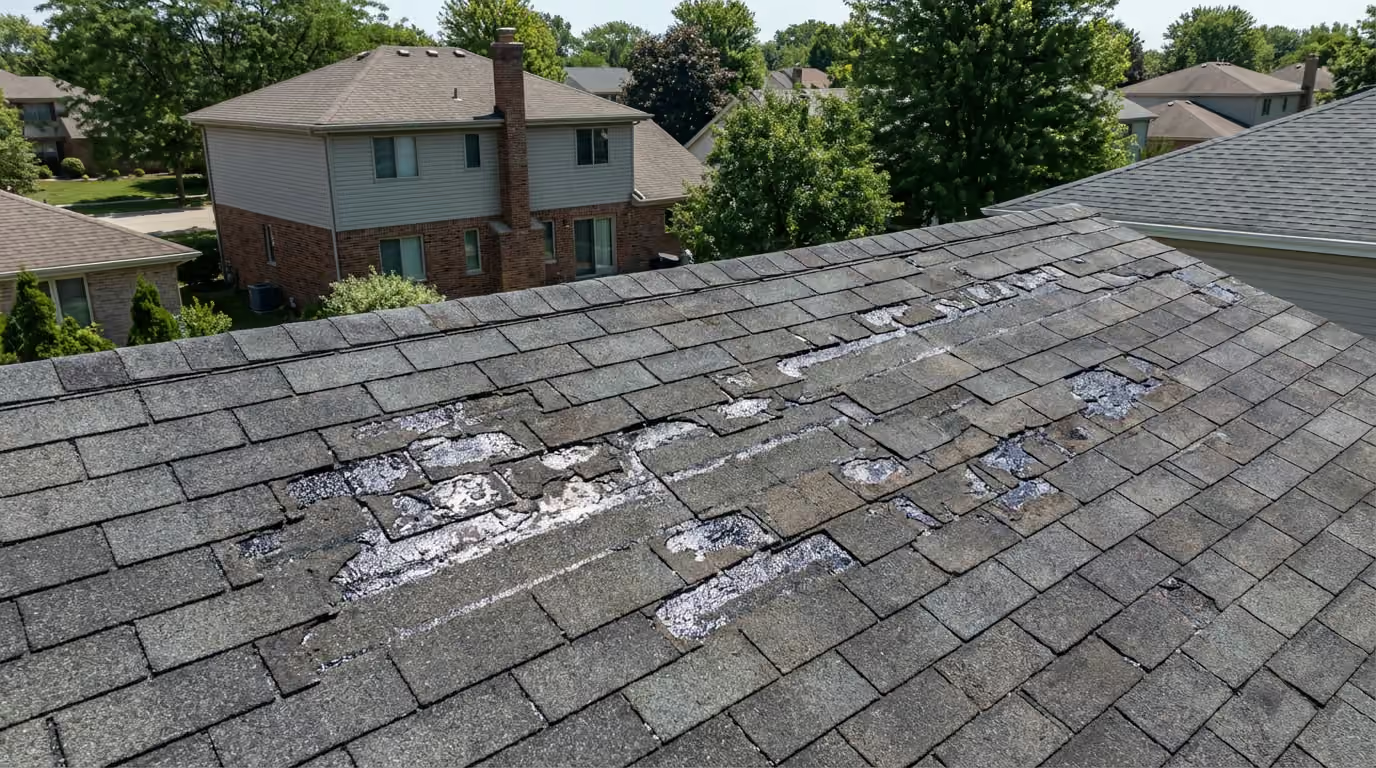
A roof problem can turn an otherwise straightforward home sale into a difficult decision. You may have missing shingles, stains in the upstairs ceiling, a roofer recommending replacement, or a buyer who wants the roof fixed before closing. If you own a house in West Chester, Ohio, you can generally sell it without replacing the roof first. The practical question is which selling method leaves you in the best position after repair costs, negotiations, and time are considered.
This guide explains how roof condition affects inspections, financing, insurance, Ohio disclosure requirements, and your final proceeds. It also shows when repairing makes financial sense and when selling as-is may be worth considering.
Can You Sell a West Chester House With an Old or Damaged Roof?
Yes. An old roof does not automatically prevent a property from being sold. A buyer might accept the roof as-is, negotiate a lower price, request a repair credit, or agree to purchase after replacement. What matters is the roof’s actual condition, the buyer’s financing and insurance arrangements, and the purchase contract.
A home with a few isolated defects is different from one with widespread leaks and damaged decking. Neither situation creates a universal rule that the seller must install a new roof.
If you want an alternative to repairing before listing, review Freedom Homes Cincy’s West Chester home-buying options. A direct cash offer is one comparison point, not the only reasonable route.
First, Find Out What Is Actually Wrong With the Roof
Before asking how much to discount your house, identify the problem. “Bad roof” can mean several things, and they do not carry the same cost or risk.
Aging shingles are not the same as active failure
Shingles may look worn or show granule loss while still shedding water. A roof’s age alone does not prove it needs immediate replacement. Conversely, a relatively new roof may have defective installation, flashing gaps, or storm damage. Ask a qualified roofer to distinguish age, cosmetic deterioration, and performance failures.
Leaks may originate around penetrations
Water near a chimney, vent boot, skylight, or roof-to-wall connection may come from failed flashing rather than the entire roof covering. Yet a visible ceiling stain cannot establish the source. Leaks can travel along framing before appearing indoors. A written diagnosis is more useful in negotiations than a confident guess.
Decking damage changes the project
Soft spots, sagging sections, or recurring water intrusion may indicate damage below the shingles. Once roofing material is removed, deteriorated sheathing can become visible. Ask contractors how additional decking, ventilation corrections, and disposal will be priced if uncovered.
If interior water damage has already developed, consult our separate guide to selling a water-damaged house in the Cincinnati area rather than treating every symptom as a roofing issue.
How Roof Damage Affects Inspections, Financing, and Insurance
A conventional-looking home sale can develop two separate questions: whether the buyer accepts the roof and whether the lender accepts the property as collateral.
The buyer’s inspection. A home inspector may report visible wear, staining, or evidence suggesting further evaluation. The buyer can then ask a roofing specialist for an assessment. Depending on contract contingencies, the parties may negotiate repairs, a credit, a price change, or cancellation.
The lender’s requirements. A buyer may be willing to handle replacement after moving in, but their lender could take a different position. The Consumer Financial Protection Bureau explains that a lender can require major repairs, such as a new roof, before closing or may require money to be set aside for work after closing. The available solution depends on the loan and lender.
The insurance question. A buyer may also need acceptable homeowners coverage to meet mortgage requirements. An insurer can examine roof age and condition when deciding whether to offer or renew coverage. The Ohio Department of Insurance’s homeowners guide identifies deteriorated roofs as an underwriting concern.
None of these means every older roof automatically fails inspection. The important distinction is between a report identifying concern and a specific contractual, financing, or insurance requirement.
For a wider explanation of sales interrupted by inspections, see our Cincinnati home-inspection guide.
Should You Repair, Replace, or Leave the Roof As-Is?
Choose based on evidence, not a blanket assumption that “new roof equals higher selling price.” Start by obtaining a clear written inspection or estimate, then compare the impact on your sale.
Targeted repair may be appropriate when a reputable contractor identifies a limited problem and confirms that the surrounding system remains serviceable. Request photographs and a description of what the repair will and will not resolve. A small repair should not be marketed as a complete roof replacement.
Full replacement can make sense when damage is widespread, multiple areas are failing, or the roofing system is near the end of its serviceable condition. It may improve buyer confidence and reduce financing objections. But replacement also introduces upfront costs, contractor scheduling, possible decking discoveries, and the risk of paying for work buyers would not fully value.
Selling as-is may be reasonable if you cannot comfortably fund replacement, have a tight moving schedule, or own an inherited or vacant house that is expensive to maintain. An as-is price usually reflects expected repairs and buyer risk. It should not be mistaken for the price of an identical property with a sound roof.
Our article on repairing versus selling as-is explains the broader decision. For a West Chester property, the roof-specific estimate should drive the comparison.
How Much Does Roof Damage Affect the Cost of Selling?
Avoid relying on a single online average for “a new roof in Ohio.” The actual estimate depends on the roof’s size and pitch, material, number of layers being removed, flashing, access, decking condition, ventilation, disposal, and whether other structural work is needed.
Ask for an itemized quote that separates the base roofing scope from possible add-ons. For example, a hypothetical contractor proposal might show:
| Illustrative cost item | Amount |
|---|---|
| Remove old material and install new roofing system | $17,500 |
| Replace damaged decking identified during work | $2,750 |
| Repair related interior ceiling damage | $2,250 |
| Illustrative total | $22,500 |
These numbers demonstrate how additional work changes a budget; they are not verified West Chester market averages or an estimate for your property. Your actual scope could be materially different.
When reviewing a quote, ask whether the roofer has included underlayment, flashing, drip edge, ventilation, disposal, labor, warranties, and any required permit or inspection fees. Also ask how unforeseen conditions will be approved and billed.
The Ohio Attorney General recommends comparing written estimates, checking references and insurance, and making sure the contract describes materials, payment terms, and responsibilities.
West Chester Roof Permits: What Sellers Should Check
West Chester Township is in Butler County, but a West Chester mailing address does not necessarily establish which local authority regulates a particular property. Before scheduling roofing work, verify the property’s jurisdiction and ask whether your project requires a township zoning certificate, county building permit, or both. Replacing shingles may involve different requirements from altering roof framing or structural components. Describe the exact scope of work when contacting local officials.
Before signing a major contract, contact West Chester Township Community Development and ask about the scope of your project. The township’s permit guidance explains that many construction projects require a zoning certificate and invites owners to confirm requirements with staff. For building-code questions, confirm whether the Butler County Building Department must be involved.
Ask who will secure approvals, whether inspections are required, and what records you should retain for a future buyer. Do not assume that a contractor’s verbal assurance settles a permit question.
If a previous roofing project remains unresolved in property records, that is a separate issue from ordinary shingle wear. Read our article about selling with an open building permit for the broader questions to investigate.
Can Homeowners Insurance Pay for a Bad Roof?
Possibly—but the cause of damage matters. A sudden covered event, such as wind or hail, is different from gradual deterioration, poor maintenance, or an installation defect. Never assume that a roof’s age entitles you to replacement through insurance.
The Ohio Department of Insurance’s roof guidance explains the importance of deductibles, replacement-cost coverage, actual-cash-value coverage, depreciation, and the policy’s claim terms.
If you suspect recent storm damage, photograph the evidence, protect the property from additional damage when safe, review your policy, and contact your insurer. Keep the adjuster’s findings and any contractor assessments together. Do not represent ordinary wear as storm damage, and do not sign an insurance-related roofing agreement you have not reviewed.
A pending claim can also complicate a sale. Before agreeing to assign claim proceeds or promising the buyer a particular payout, ask the insurer and closing professional how the transaction should be documented. Coverage, payments, and rights may depend on the facts and policy.
For a more general overview, the state provides a severe-weather insurance toolkit.
Ohio Roof Disclosure Rules: What Must a Seller Tell the Buyer?
Selling as-is does not erase disclosure obligations. Under Ohio Revised Code Section 5302.30, many residential sellers must provide a completed Residential Property Disclosure Form, subject to statutory exceptions. The form addresses known material conditions, including the roof.
The Ohio Department of Commerce’s official form page is the right starting point. Describe known leaks, past damage, significant repairs, insurance claims, and other requested matters accurately. If you genuinely do not know an answer, follow the form’s instructions rather than inventing one.
For example, “Ceiling in upstairs bedroom stained after rain in March; contractor recommended further roof evaluation” communicates a known issue more responsibly than “roof fine” when it has not been investigated. Retain invoices, inspection reports, photographs, and written communications that support what you disclose.
Some transfers qualify for exceptions, and particular circumstances may require legal advice. A cash offer or as-is clause does not, by itself, establish an exemption. Concealing a known leak is not a safe strategy, whether the buyer is an individual or an investor.
What Roof Records Should You Have Ready for Buyers?
You do not need a perfect record of every repair, but the documents you have can help buyers evaluate the roof without guessing. Collect any professional inspection reports, dated photographs, contractor estimates, repair invoices, insurance claim correspondence, and applicable permit records. If a roof warranty exists, check whether it transfers to a new owner instead of promising that it does.
Keep confirmed findings separate from suspected problems. For example, if a contractor has not removed roofing materials, the condition of concealed decking may remain unknown. Clear documentation can make negotiations more productive while helping you answer disclosure questions accurately.
Three Selling Routes for a West Chester Home With Roof Damage
1. Replace the roof, then list on the open market
This route offers the best chance to present the house to move-in-ready buyers if the rest of its condition supports that positioning. You may attract more conventional purchasers and avoid a roof-related negotiation after inspection.
However, you need available funds and confidence that the improvement will produce enough additional sale proceeds. Check comparable properties with your agent before treating the entire replacement cost as money you will recover at closing.
2. List the property with the defect clearly disclosed
An as-is listing can reach buyers willing to undertake the repair. Get a professional estimate, price the property with the defect in mind, and supply relevant reports. A realistic asking price can reduce repeated negotiations, although no listing method guarantees a buyer or an unchanged offer.
Be specific about whether the seller will consider a repair credit or adjustment. Some credits may be limited by a lender’s rules, and a credit cannot necessarily cure a property-condition requirement. Your agent and the buyer’s lender should verify what is permissible before you rely on that solution.
3. Compare a direct cash sale
A buyer using its own funds may be able to evaluate a house that needs substantial roofing work without depending on the same mortgage-underwriting steps. That removes one possible obstacle, not every closing requirement. A cash purchaser still needs a workable contract, clear title, and a feasible closing plan.
Freedom Homes Cincy considers eligible houses in their existing condition. You can review how the buying process works or request a no-obligation cash offer to compare with your estimated net from listing.
Roof Replacement vs. Selling As-Is: A West Chester Net-Proceeds Example
Imagine a West Chester homeowner with a mortgage balance of $147,000 and a roof that needs replacement. The following figures are hypothetical, chosen to illustrate a decision—not an appraisal, contractor quote, or promise of an offer.
| Repair then list | List as-is | Direct cash offer | |
|---|---|---|---|
| Assumed sale price | $335,000 | $294,000 | $269,000 |
| Roof and interior work | −$26,000 | $0 | $0 |
| Assumed selling/closing costs | −$20,000 | −$18,000 | $0* |
| Assumed holding costs | −$5,000 | −$4,000 | $0* |
| Mortgage payoff | −$147,000 | −$147,000 | −$147,000 |
| Illustrative proceeds | $137,000 | $125,000 | $122,000 |
The cash column assumes the particular buyer covers the stated transaction costs and the seller incurs no additional holding expense. Real offers, taxes, prorations, liens, or other obligations can change every figure.
In this example, repairing generates $15,000 more than the cash route—but requires investing $26,000 upfront and taking renovation and resale risk. The as-is listing produces $3,000 more than the direct offer, but requires more estimated carrying and selling expenses.
The right choice depends on whether you can fund work, tolerate uncertainty, and achieve the projected prices. Our cash-sale versus listing net-proceeds comparison offers another framework for evaluating a transaction.
What if a Buyer Discovers the Roof Problem After You Are Under Contract?
Do not assume you must immediately agree to every demand. Read the signed agreement and identify inspection, financing, appraisal, and repair provisions. What the buyer can request—and what happens if you disagree—depends on that contract and the relevant deadlines.
First, ask for the inspection finding and any roofing evaluation in writing. Next, obtain your own informed assessment if the issue is disputed. Then compare a limited repair, negotiated price change, permitted credit, or mutually agreed cancellation. Keep communications documented through the appropriate professionals.
If the issue emerges late, confirm whether the lender or insurer requires completed work before closing. Simply reducing the price may not satisfy them. Also avoid rushing into roofing work that cannot be finished or inspected on the contractual schedule.
If negotiations collapse, consider how a relisting would affect carrying costs and whether an as-is buyer is a better fit.
Practical Steps Before You Put the House Up for Sale
- Confirm the roof’s condition. Obtain a professional assessment and distinguish necessary repairs from recommendations for full replacement.
- Compare written estimates. Ask what is included, what is excluded, and how hidden decking damage could affect the final cost.
- Review insurance, permits, and disclosures. Confirm applicable requirements with the appropriate professionals and keep supporting documents available.
- Calculate your likely net proceeds. Include repair expenses, selling costs, mortgage payoff, carrying costs, and realistic offers.
- Evaluate buyers and contract terms. Check financing or proof of funds, inspection contingencies, repair obligations, and the proposed closing schedule.
Do not commit to a major roofing project solely because you assume every buyer will require one. Compare the financial consequences before deciding.
Frequently Asked Questions About Selling a House With a Bad Roof in West Chester, OH
1. Can I sell my house in West Chester, OH, without replacing the roof?
Yes. You can generally sell a house with an old, leaking, or damaged roof if the buyer accepts its condition and applicable contract and financing requirements are satisfied.
2. Does a bad roof prevent a buyer from getting a mortgage?
Not always. A lender may require roof repairs when damage affects safety, habitability, or property eligibility. Requirements depend on the loan program, appraisal, and lender.
3. How much does a bad roof reduce a home’s selling price?
There is no fixed discount. The impact depends on repair estimates, roof condition, buyer demand, financing concerns, and comparable home sales.
4. Do I have to disclose roof leaks when selling a house in Ohio?
Generally, sellers covered by Ohio’s residential property disclosure requirements must report known material roof problems. Certain transfers qualify for statutory exemptions.
5. Can I sell a house with a leaking roof as-is?
Yes. Selling as-is allows buyers to consider the property in its existing condition, but it does not automatically eliminate applicable disclosure obligations.
6. Will homeowners insurance pay for a roof replacement?
Coverage depends on the cause of damage and your policy. Sudden covered events may qualify, while ordinary aging and maintenance-related deterioration generally do not.
7. Do I need a permit to replace a roof in West Chester, OH?
Requirements depend on the property’s jurisdiction and roofing work involved. Confirm any necessary zoning or building approvals with the appropriate local authorities before starting.
8. Can I offer a buyer a roof repair credit instead of replacing the roof?
Possibly. A buyer may accept a negotiated credit, but some lenders require repairs before closing. Confirm the financing requirements before agreeing to this arrangement.
9. Can a cash buyer purchase my West Chester house with roof damage?
Yes. Some cash buyers purchase houses with roofing problems without requiring the seller to make repairs first. Compare the offer, contract terms, and estimated net proceeds.
Your Next Move: Get Clarity Before Spending on a New Roof
A damaged roof does not automatically make your West Chester home unsellable. The most useful first step is to understand what is damaged, what repair would actually cost, and how each selling route changes your financial outcome.
If listing after replacement offers the best net result and you can comfortably manage the project, that may be worth pursuing. If you would rather not coordinate a major roof job, compare a realistic as-is listing price with a direct offer. Freedom Homes Cincy can discuss a possible cash offer for your West Chester property without requiring you to replace the roof first.
This article provides general information, not legal, insurance, financial, or contracting advice. Confirm property-specific questions with the appropriate licensed professionals and local authorities.